Quick Summary
Solar power helps U.S. homeowners lower electricity bills, increase home value, and gain energy independence, but it also has upfront costs and sunlight-dependent limits. This guide explains the solar energy advantages and disadvantages, including savings, maintenance, payback periods, incentives, and roof suitability, helping you decide if solar is the right choice for your home.
Introduction
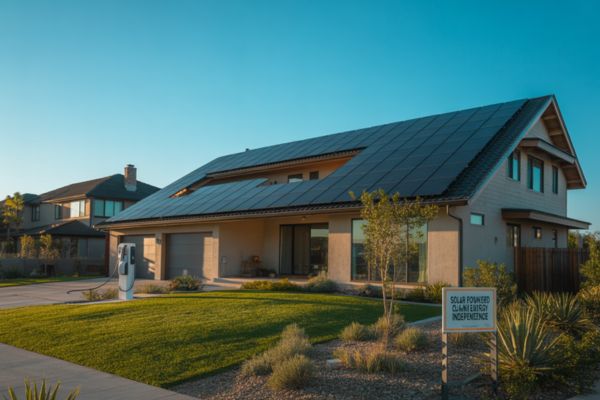
Understanding solar energy advantages and disadvantages is essential for every U.S. homeowner before installing panels. Solar systems provide residential solar savings, reduce reliance on the grid, and act as a climate-friendly energy source, while boosting energy independence and renewable energy home value.
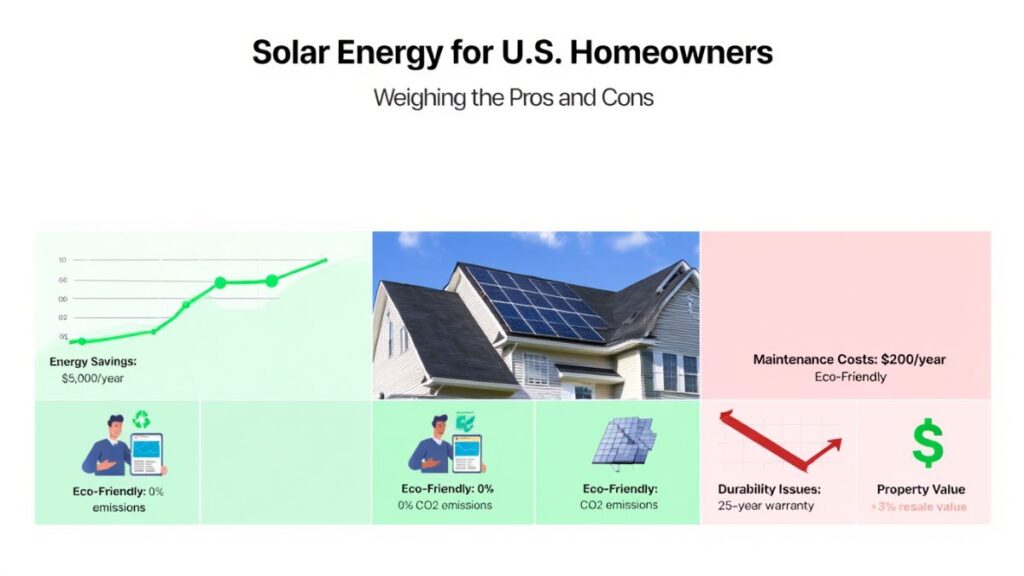
However, solar also has challenges like the high upfront cost of solar, sunlight dependence, and occasional maintenance needs. This article covers the main solar energy advantages and disadvantages, including efficiency, lifespan, incentives, and practical considerations, so homeowners can make informed energy decisions confidently.
What Is Solar Energy and How Does It Work?
Solar energy converts sunlight into electricity through photovoltaics (PV) systems. It’s one of the fastest-growing renewable technologies in the U.S., reducing dependence on fossil fuels and cutting greenhouse gas emissions. Learn more about solar panels at Energy.gov Solar Guide.
Most homes use grid-tied solar systems, which let you sell surplus energy back to the grid via net metering programs. Learn more at SEIA Net Metering.
1. Advantage: Renewable, Abundant, and Environmentally Friendly
One of the primary solar energy advantages is that it is a clean, climate-friendly energy source. It reduces greenhouse gas emissions and has a minimal environmental footprint over its lifespan. The U.S. receives ample sunlight, making solar accessible nationwide.
Understanding these solar energy advantages and disadvantages allows homeowners to weigh environmental benefits against potential challenges. For more context, explore this list of renewable energy sources.
2. Advantage: Reducing or Eliminating Electric Bills
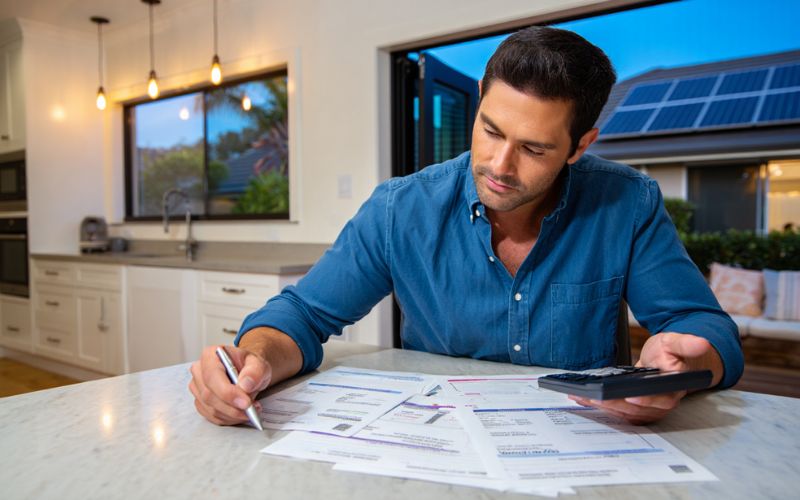
A major solar energy advantage is the ability to reduce your monthly power bill and gain control over electricity spending. Many households cut costs by 50%–90%, especially in states with high electricity rates like California, New York, and Arizona.
For a beginner-friendly guide, check Solar Powering Your Home. Proper system design and net-metering credits can further maximize residential solar savings.
3. Advantage: Increasing Property Value and Energy Independence
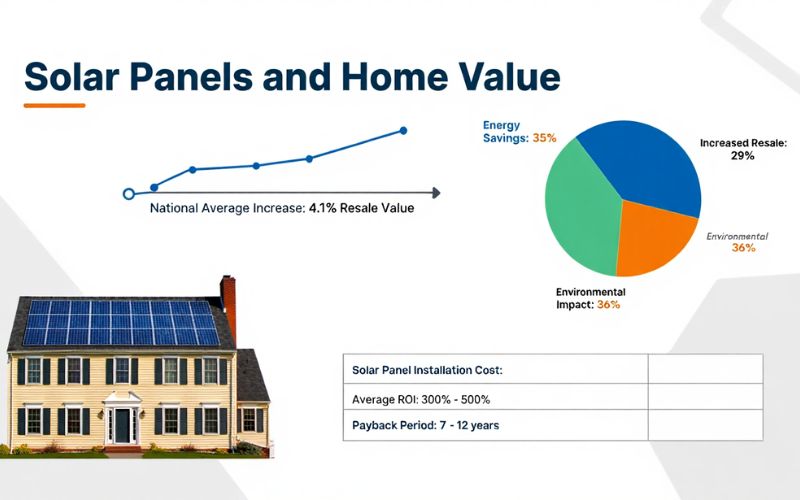
Homes with solar panels often increase the value of your home, one of the most cited solar energy advantages. Buyers recognize long-term savings and reduced reliance on utilities, making solar-equipped homes sell faster and at higher prices.
Solar also provides strong energy independence, protecting homeowners from rising electricity rates. Learn how solar fits into America’s energy transition in From Coal to Solar: Renewable and Nonrenewable Energy.
4. Advantage: Low Maintenance, Long Lifespan, and Technological Advancements
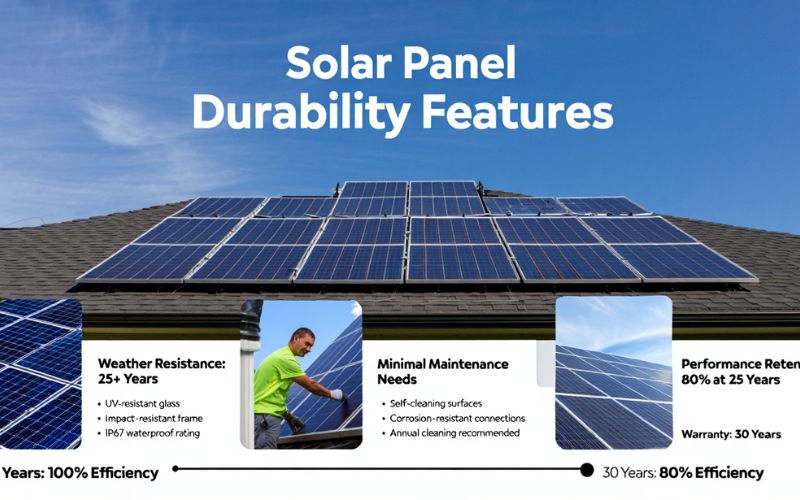
Modern solar panels last 25–30 years with minimal upkeep, making low maintenance one of the key solar energy advantages. Inverters may require replacement after 10–15 years, and occasional panel cleaning is needed.
Technological improvements in solar panel efficiency and battery storage cost reductions increase system reliability. For more resources, see Top Solar Energy Resources.
5. Advantage: Wide Applications – From Remote to Urban Settings
Another solar energy advantage is its flexibility. Panels can power homes, businesses, farms, RVs, and off-grid cabins. Rural areas with limited utility access benefit significantly, and portable solar generators provide emergency backup. Explore the broader scope of renewables in energy solutions by seeing the Future of Biomass Energy Production
These pros are discussed in more detail in our Complete Guide to Solar Energy for Homes.
6. Disadvantage: High Upfront Costs and Financial Payback Considerations
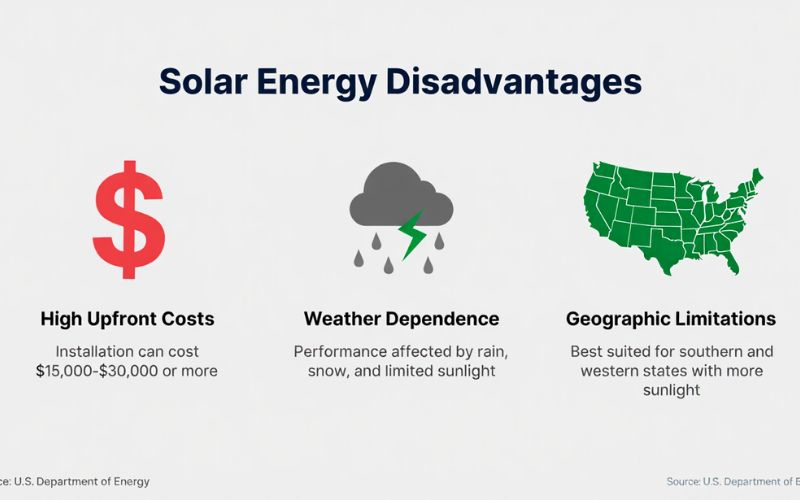
A main solar energy disadvantage is the high upfront cost of solar. Even with federal and state incentives, many families need loans or financing. Installation costs depend on panel type, roof condition, and labor.
The solar panel payback period ranges from 6–12 years, depending on electricity prices and incentives. You can calculate your system’s payback with the Energy.gov Solar Calculator.
7. Disadvantage: Dependence on Sunlight, Weather, and Roof/Location Conditions
Solar is a weather-dependent energy source, making output lower during cloudy days, rain, or winter months. Homes with shaded or improperly oriented roofs may see reduced efficiency.
Roof compatibility matters — old or damaged roofs may require repair before installation, adding cost.
8. Disadvantage: Space Requirements, Aesthetic & Practical Concerns
Some installations need large roof areas, a common solar energy disadvantage. Limited roof space may require ground-mounted systems that need yard space. Aesthetic concerns vary: some homeowners like the modern look, while others see it as visually intrusive.
9. Disadvantage: Environmental and Manufacturing Impacts, End-of-Life Issues
Solar panels have some manufacturing environmental impact, including energy used in production and transportation. However, their lifetime carbon footprint remains significantly lower than that of fossil fuels.
End-of-life recycling programs are improving, and the U.S. is expanding facilities to responsibly handle panel waste. For insights into geothermal energy as a renewable, fact-based option, see Geothermal Energy: Is It Renewable? Facts. Also consider the role of geothermal power in the U.S. in Geothermal Energy in the United States
10. How to Evaluate If Solar Energy Makes Sense for You (U.S. Focused)
Consider electricity rates, sunlight hours, roof condition, and incentives. States with high energy costs often see the greatest savings. Check if your roof gets 4–6 hours of sunlight daily for optimal performance.
Evaluating these factors helps weigh the solar energy advantages and disadvantages for your home.
11. Future Trends: What’s Next for Solar (and What It Means for Homeowners)
Solar technology is advancing rapidly. Expect higher-efficiency panels, lower-cost batteries, and more home energy automation options. States are expanding net metering, smart meters, and community solar programs.
Future homes may integrate solar with EV chargers, smart thermostats, and AI-based energy management systems.
Conclusion
Solar energy advantages and disadvantages show that while solar can cut electricity bills, increase home value, and provide energy independence, it also requires a high upfront investment and depends on sunlight.
Understanding these key points helps U.S. homeowners make informed, confident decisions. With advancing technology and incentives, solar remains one of America’s best long-term energy options. To get a full picture of solar energy for homes, including installation tips and top resources, read the Solar Energy pillar page.
FAQS
Q1: What is the 33% rule in solar panels?
A1: The 33% rule suggests a solar system should produce around one-third of your total electricity usage to balance cost and efficiency.
Q2: Why is my light bill so high if I have solar panels?
A2: High bills can occur due to low sunlight, shading, increased usage, or insufficient system size.
Q3: Why is it so hard to sell a house with solar panels?
A3: Selling can be tricky if panels are leased or financed, as buyers may be hesitant to assume contracts.
Q4: What is the downside of solar panels on a house?
A4: Downsides include high upfront cost, roof suitability issues, maintenance, and weather-dependent energy production.
Q5: Do you still have to pay an electric bill with solar panels?
A5: Yes, you may still pay a small bill for grid access, especially during low sunlight or nighttime usage.

Welcome to Renewable Energy! I’m Adnan, Owner, Admin, and Author of this Website.