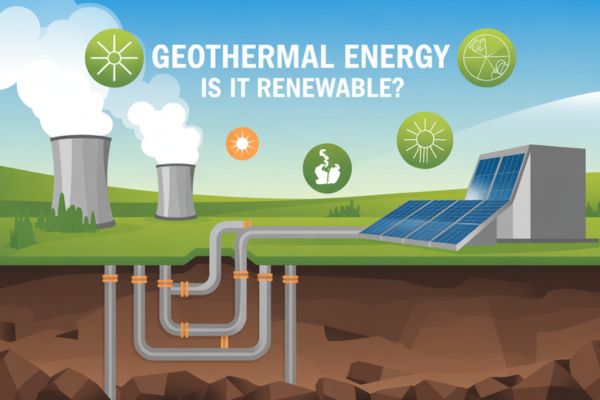
Quick Summary:
Geothermal energy in the United States is transforming the nation’s clean power landscape by providing constant, renewable baseload electricity. With advances in enhanced geothermal systems and heat pump technology, it’s driving innovation, job creation, and a sustainable energy future across America.
Geothermal energy in the United States is emerging as one of the most reliable sources of clean energy that works around the clock. Powered by the Earth’s natural heat, it delivers renewable baseload power that complements solar and wind. To understand how solar works at the home level, explore this guide on solar powering your home.
From enhanced geothermal systems to efficient geothermal heat pump installations, innovation is transforming how Americans use underground heat for electricity and comfort.
Supported by new federal renewable energy policies, the U.S. is rapidly expanding geothermal projects nationwide. In this article, you’ll learn how geothermal works, where it’s growing fastest, what challenges it faces, and why it’s key to America’s sustainable energy future.
Understanding Geothermal Energy and Its Growing Role in the United States
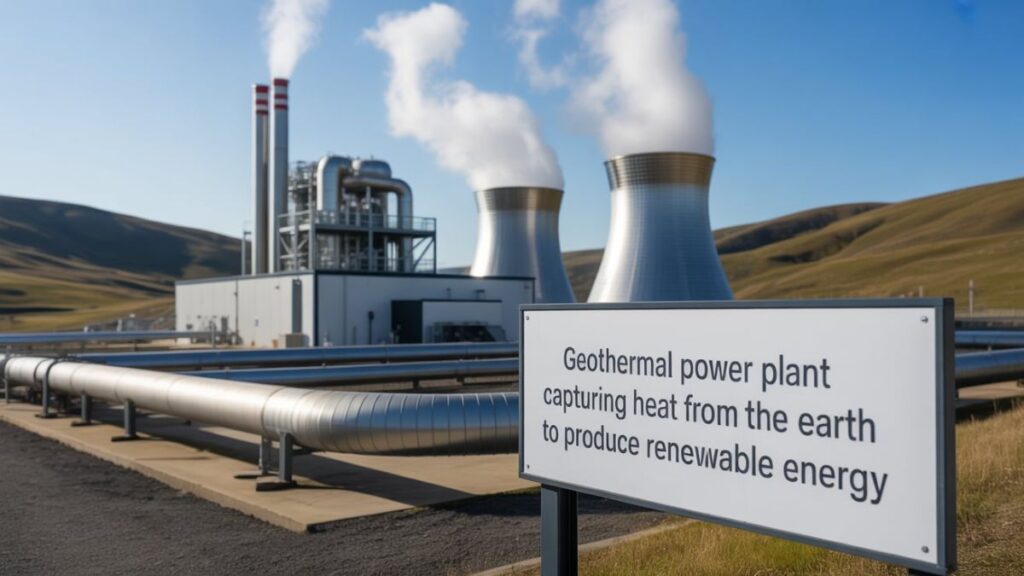
Geothermal energy in the United States is created from the Earth’s natural heat stored in thermal reservoirs. This underground heat, accessed through drilling technology, is used to produce geothermal electricity and heat for homes, businesses, and industries. It’s a clean, continuous, and cost-effective way to power the country.
The U.S. is a global leader in geothermal electricity generation, especially across the western states. Because this energy source is constant and reliable, it helps stabilize the electric grid while reducing carbon emissions — a key goal in advancing clean energy in the United States. For a broader overview of other renewable sources, see the list of renewable energy sources.
According to the U.S. Department of Energy (DOE), geothermal systems can supply clean power around the clock with minimal land use or emissions.
What is Geothermal Energy and How Does It Work?
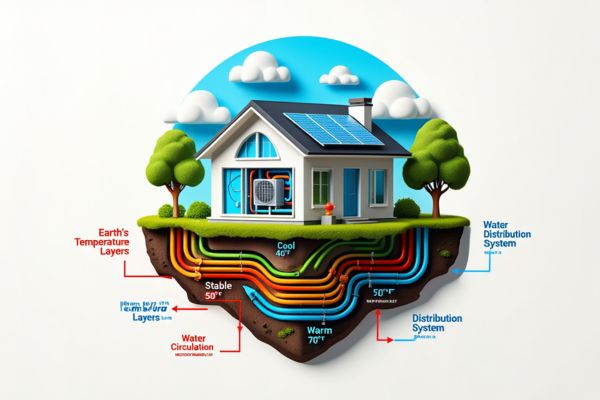
Geothermal systems use underground steam or hot water to turn turbines that generate geothermal electricity. For homes, a geothermal heat pump transfers heat from the ground into the building, keeping indoor temperatures comfortable year-round. These heat pump systems save energy and cut bills by up to 70%.
Why the United States Has Ideal Conditions for Geothermal Development
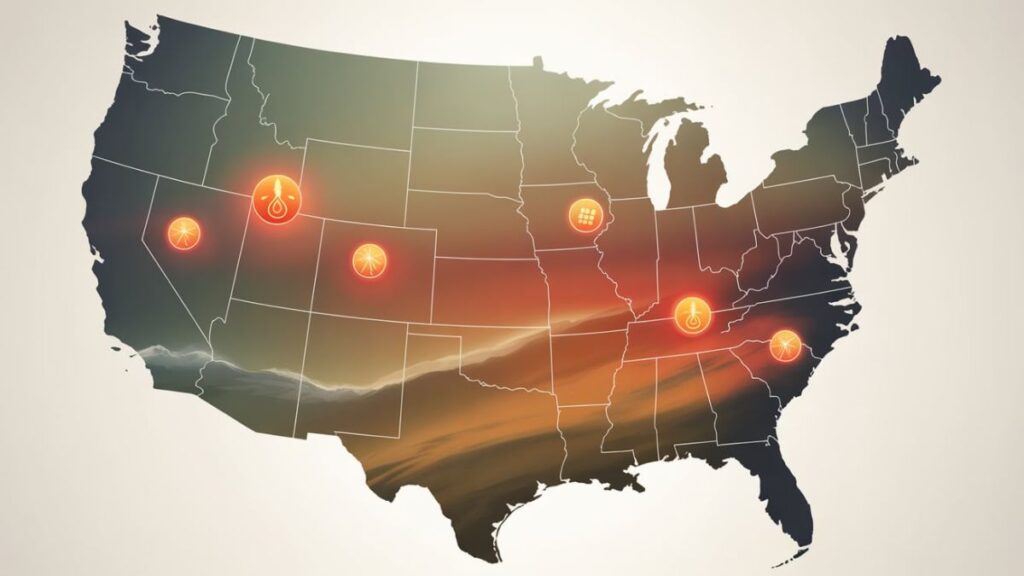
The U.S. has enormous geothermal basins beneath states like California, Nevada, Utah, and Oregon. These regions sit along active tectonic zones where Earth’s heat is closer to the surface. Many geothermal projects United States are now emerging in new areas — from Texas to Idaho — thanks to better exploration tools and innovation in the U.S. energy sector. You can also compare how geothermal fits within the bigger energy categories in this guide on renewable vs nonrenewable energy resources.
The Current Landscape of Geothermal Energy in the United States
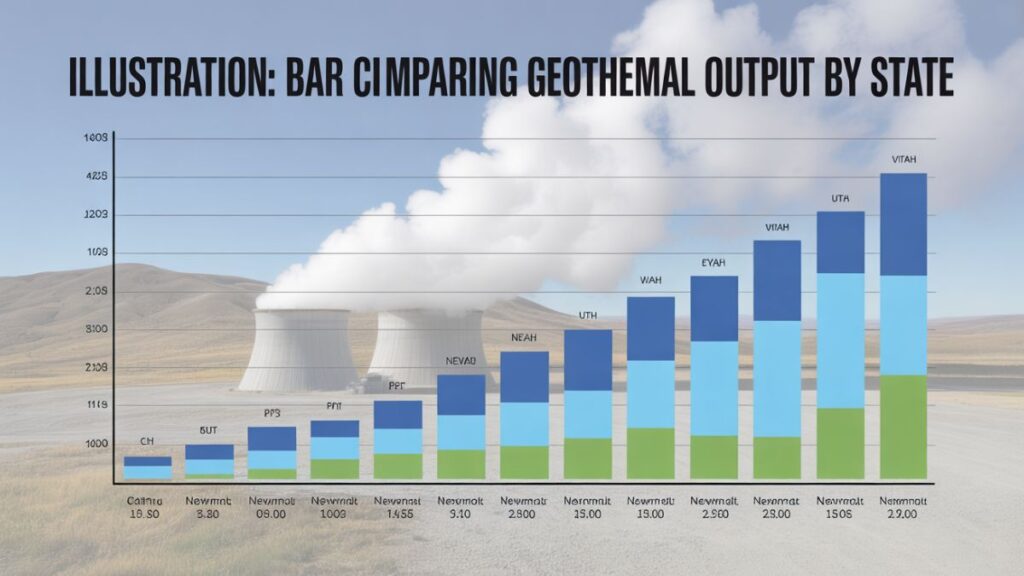
Currently, geothermal energy in the United States generates about 3.7 gigawatts (GW) — enough to power nearly 2 million American homes, based on data from the U.S. Energy Information Administration (EIA). This makes the U.S. the world’s leading geothermal producer after Indonesia.
Leading states like California, Nevada, and Utah account for most of this output. But the sector is expanding as more geothermal projects United States secure funding and regulatory approval, supported by both the DOE and private investors. Learn how geothermal compares to other renewables in this article on the top solar energy resources.
Installed Capacity and Contribution to the U.S. Power Grid
Renewable baseload power from geothermal keeps the U.S. grid stable when solar and wind slow down. Plants like The Geysers in California — the world’s largest geothermal field — demonstrate how reliable this clean energy source can be.
The EIA confirms geothermal delivers continuous generation, making it crucial for maintaining grid stability as renewable penetration grows.
Leading States and Emerging Regions for Geothermal Development
California contributes over 70% of U.S. geothermal generation, but newer U.S. geothermal regions — like Utah’s FORGE project and Nevada’s enhanced systems — are advancing quickly. The Utah FORGE facility, supported by the Department of Energy, is testing deep enhanced geothermal systems (EGS) that could revolutionize the field.
The Untapped Potential of America’s Geothermal Resources
Experts believe the United States’ geothermal potential could generate more than 60 GW if deeper and hotter sources are developed. This is nearly 15 times the current output. Technologies like superhot rock geothermal and enhanced geothermal systems are unlocking new frontiers for national-scale adoption.
EGS works by creating artificial reservoirs deep underground. By injecting water into hot, dry rocks, it captures steam to power turbines — expanding geothermal reach beyond traditional hotspots. For a related deep-dive on geothermal’s sustainability, check Is geothermal energy renewable? – Key facts.
Comparison: Conventional vs. Next-Generation Geothermal Energy
| Feature | Conventional Geothermal | Enhanced/Superhot Geothermal |
| Resource Type | Natural steam/hot water | Artificial reservoirs |
| Temperature Range | 300–700°F | 700–1000°F+ |
| Availability | Limited regions | Nationwide potential |
| Scalability | Moderate | High (national scale adoption) |
The Clean Air Task Force (CATF) reports that EGS and superhot technologies could help geothermal provide 20% of U.S. electricity by 2050. To understand how other energy sources transition from fossil fuels to clean power, see from coal to solar – renewable and nonrenewable energy.
Technologies Powering the Next Phase of Geothermal Energy in the U.S.
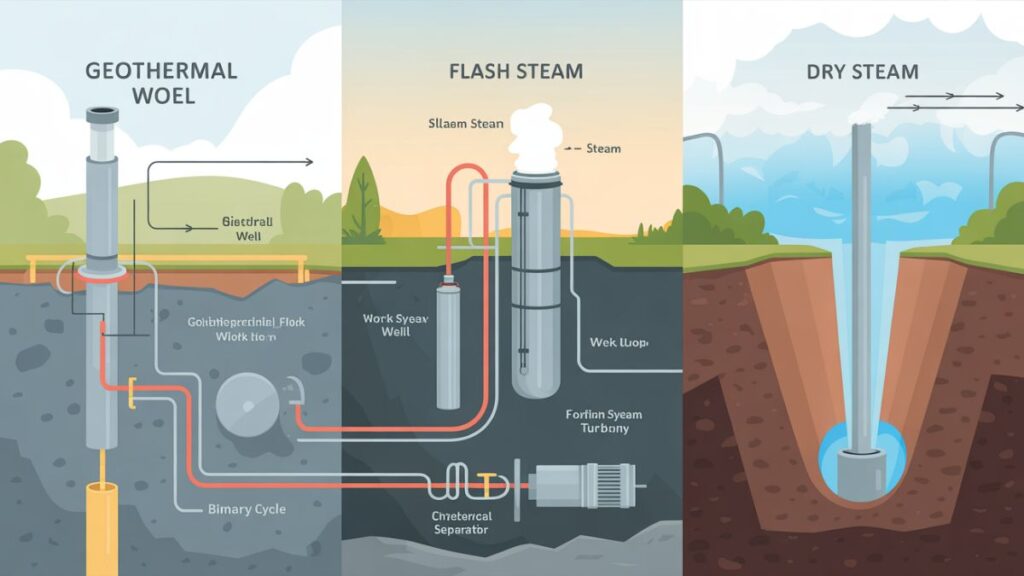
Advancements in binary cycle plants and drilling technology have made geothermal energy in the United States more efficient than ever. AI-powered sensors and advanced imaging now help identify underground heat zones more quickly and cost-effectively, reducing exploration risk and the cost of geothermal energy in the U.S.
At the same time, geothermal heat pumps United States are gaining traction in homes and offices. These systems utilize steady underground temperatures to provide heating and cooling, thereby reducing dependence on fossil fuels and lowering carbon footprints.
How AI, Data, and Advanced Drilling are Transforming Exploration
Using predictive data and machine learning, developers can now locate deep geothermal basins USA with minimal drilling waste. This digital transformation is accelerating the future of geothermal in the United States, making it safer, more cost-effective, and accessible across different terrains.
Environmental and Economic Benefits of Geothermal Energy in the United States
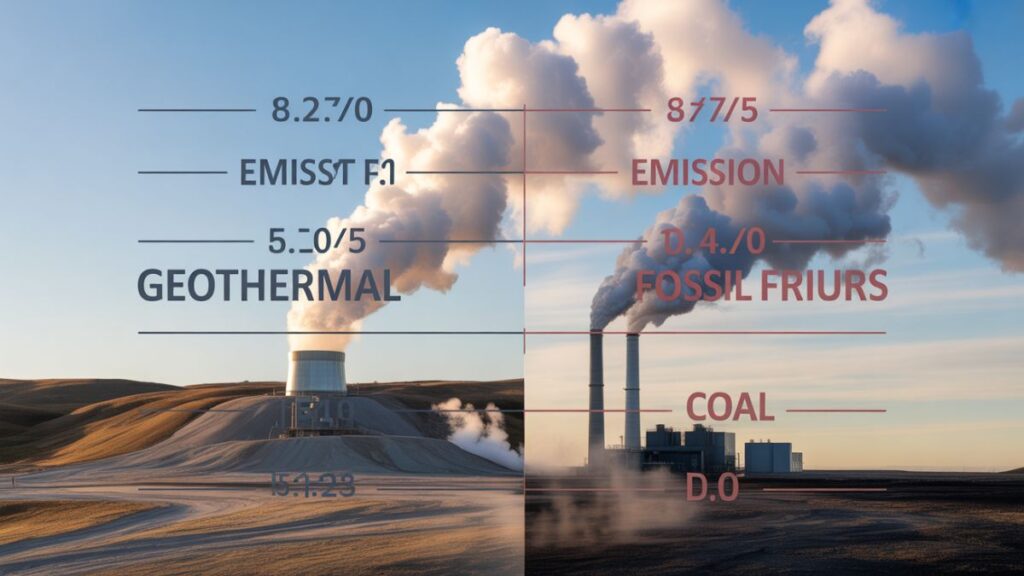
Geothermal plants emit almost zero greenhouse gases. The U.S. Department of Energy reports that they produce 99% fewer CO₂ emissions than coal plants. This positions geothermal as a core part of clean energy in the United States and long-term climate solutions.
Beyond the environment, geothermal job creation is rising fast. Each project creates opportunities for engineers, geoscientists, and construction teams. These skilled jobs strengthen local economies while promoting renewable baseload power.
Creating Local Jobs and Strengthening U.S. Energy Independence
The growth of geothermal job creation directly supports American workers and rural economies. Local manufacturing of turbines and heat pump components adds further benefits. Expanding geothermal means more domestic energy production — a major step toward U.S. energy independence.
Challenges Facing Geothermal Energy Growth in the United States
While potential is huge, geothermal barriers in the U.S. include high drilling costs and long permitting for geothermal projects U.S.. Some locations require years of geological study before development begins. Simplifying regulations could speed up adoption.
Public understanding is another barrier. Many Americans aren’t aware of the reliability and efficiency of geothermal compared to other renewables. Educating consumers about geothermal heat pump systems and EGS technology can help bridge this gap.
U.S. Policies, Incentives, and Federal Support for Geothermal Expansion
Federal initiatives are fueling growth. The Inflation Reduction Act (IRA) includes major geothermal incentives U.S., such as a 30% investment tax credit for clean technologies. Meanwhile, the DOE’s Geothermal Technologies Office (GTO) offers millions in geothermal funding to advance exploration and pilot programs.
A strong federal renewable energy policy U.S. is crucial for continued expansion. Simplified land leasing and coordinated state programs can boost private investment and reduce barriers.
For policy details, visit the DOE Geothermal Technologies Office.
The Future of Geothermal Energy in the United States
The future of geothermal in the United States looks incredibly bright. Analysts predict that output could double by 2035, driven by innovation, U.S. startups, and next-generation EGS deployment. As geothermal scaling United States accelerates, it will work alongside wind, solar, and battery storage to form a resilient clean energy network.
Private investment is growing, with companies like Fervo Energy, Chevron, and Google backing large-scale superhot rock geothermal pilots. This collaboration signals a transformative era in the country’s energy landscape.
How Americans Can Participate in the Geothermal Revolution
Everyday citizens can join this shift. Homeowners can install small-scale geothermal U.S. systems to reduce energy bills. Businesses and schools can join community geothermal project U.S. programs that share underground heating and cooling infrastructure.
State incentives and rebates make geothermal heat pumps United States more affordable than ever, giving Americans direct access to clean, renewable comfort.
Conclusion – The Path Forward for Geothermal Energy in the United States
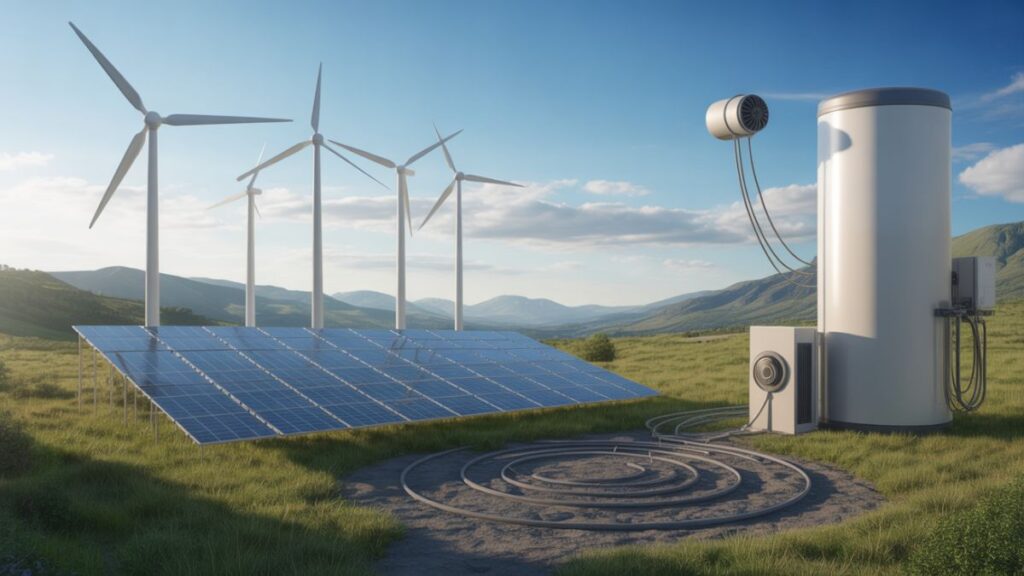
Geothermal energy in the United States isn’t just another renewable option — it’s the bridge to a 24/7 sustainable energy future. With renewable baseload power, near-zero emissions, and strong job growth, it complements solar and wind perfectly.
As technology evolves and U.S. geothermal policy expands, America has a once-in-a-generation chance to tap into the limitless power beneath its feet — ensuring a cleaner, stronger, and more independent future.
Explore how solar contributes to America’s renewable future in this guide: solar powering your home.
FAQs
1: What exactly is geothermal energy, and how does it work in the United States?
Geothermal energy uses the Earth’s internal heat — from thermal reservoirs underground — to generate electricity or to heat and cool buildings. In the U.S., wells are drilled into hot water or steam deep below the surface, and that heat turns turbines or powers geothermal heat pump systems. (U.S. Energy Information Administration)
2: Where in the U.S. is geothermal energy available and being developed?
Conventional geothermal electricity generation is concentrated in states like California, Nevada, and Utah, where hot underground reservoirs naturally exist. However, using techniques like enhanced geothermal systems (EGS) opens up more regions across the U.S. for development. (The Department of Energy’s Energy.gov)
3: What are the benefits of geothermal energy in the United States?
Geothermal offers renewable baseload power — electricity available 24/7, unlike solar or wind, which depend on weather. It also supports geothermal job creation, strengthens energy independence, and has a smaller land footprint and lower emissions compared to fossil fuels. (The Department of Energy’s Energy.gov)
4: What are the main challenges and barriers for geothermal energy growth in the U.S.?
Challenges include high upfront costs for drilling and exploration, complex permitting for geothermal projects U.S., geological risk, and limited awareness among the public. These are often described as major geothermal barriers United States. (Energy Savings)
5: How can businesses or homeowners in the United States get involved in geothermal energy?
Residents and businesses can consider small-scale geothermal U.S. installations such as ground-source heat pumps, which qualify for geothermal incentives U.S. tax credits. Community geothermal projects are also emerging for larger-scale applications. (nationalgridus.com)

Welcome to Renewable Energy! I’m Adnan, Owner, Admin, and Author of this Website.