Quick Summary:
Biomass energy production is revolutionizing clean power by converting organic waste into renewable electricity, heat, and fuels. This article explores how innovative technologies, sustainable feedstocks, and global trends are shaping the future of biomass energy for a greener, low-carbon world.
Introduction to Biomass Energy Production
Biomass energy production is transforming how the world creates clean, renewable power from organic materials like wood, crops, and waste. This sustainable process converts natural feedstocks into electricity, heat, and fuels while cutting carbon emissions. In this article, you’ll learn how renewable biomass energy works, explore key biomass conversion technologies, and discover how waste-to-energy biomass systems turn everyday waste into valuable power.
We’ll also cover the challenges of biomass sustainability and the growing role of biomass feedstocks for power in supporting a cleaner, circular economy. By the end, you’ll understand why biomass is a critical part of the future global energy transition. To explore how other renewables contribute to this transition, see the list of renewable energy sources.
What is Biomass? Understanding the Feedstock’s
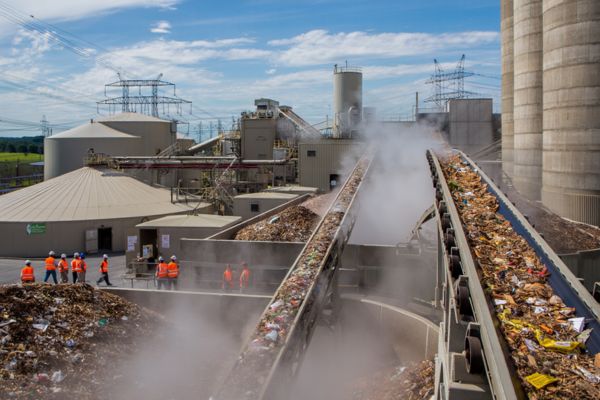
In the context of biomass energy production, biomass feedstocks for power include wood chips, agricultural residues, municipal solid waste, algae, and animal manure. These are renewable organic resources that can be processed into energy. (U.S. Energy Information Administration)
Proper sourcing is crucial: sustainable feedstock avoids deforestation and land-use issues. In the U.S., forestry by-products and agricultural residues dominate the supply chain for biomass. (SciSpace)
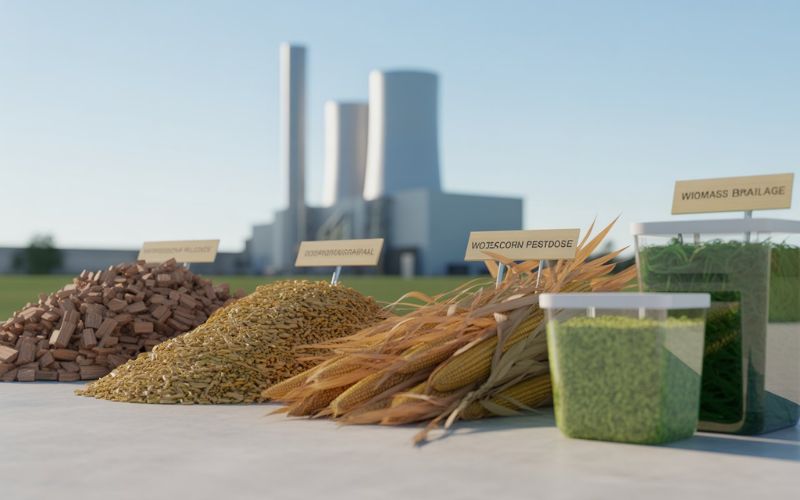
Common Biomass Feedstocks
Wood wastes (sawdust, mill scraps), crop residues (stalks, husks), municipal organic waste, and animal manure all qualify as potential feedstocks. Each has different energy content and handling needs.
Sustainable Sourcing and Supply Chains
Ensuring a reliable biomass energy supply chain means managing logistics, transportation, and upstream impacts. Poor sourcing can make the energy production less “green.”
Agricultural Waste as an Untapped Resource
In many U.S. states, agricultural residues remain underutilized. Turning these into energy supports both waste reduction and local rural economies.
How Biomass Energy Production Works: Conversion Technologies
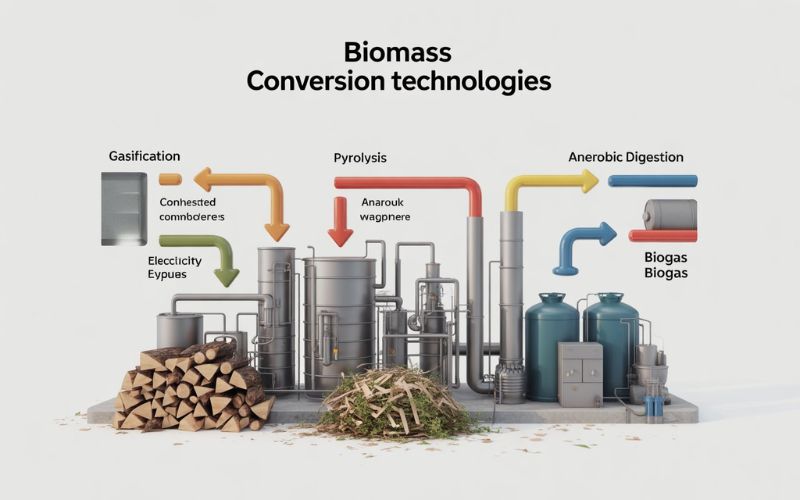
There are multiple biomass conversion technologies used to transform feedstocks into usable power or fuel. These include direct combustion, gasification, anaerobic digestion, and biofuel production. (NREL)
Choosing the right conversion pathway influences efficiency, emissions, and cost. For instance, classic combustion is simple but less efficient, whereas gasification can handle diverse feedstocks and reduce pollutants. For comparison with other clean power technologies, check the top solar energy resources.
Direct Combustion Systems
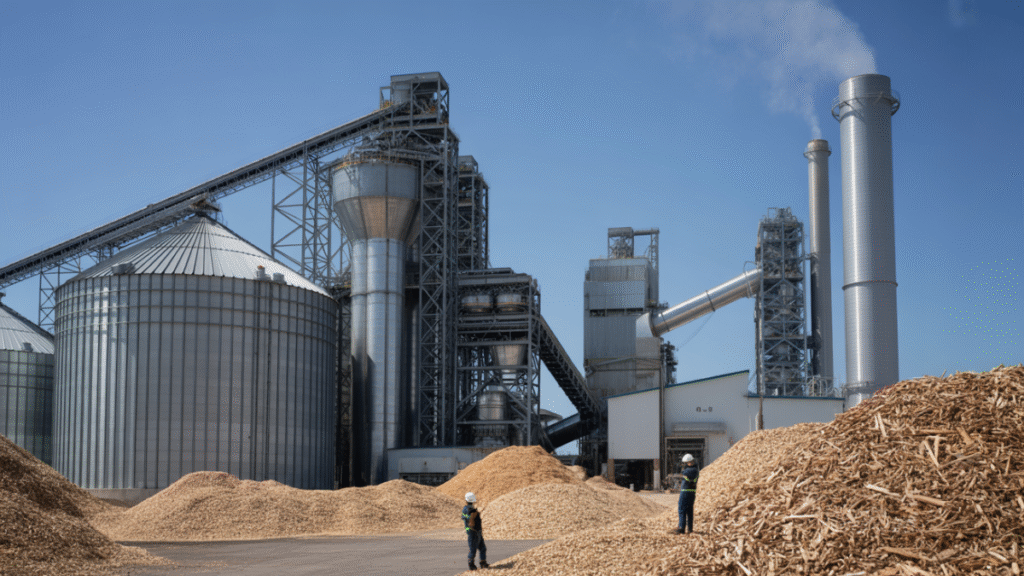
Direct burning of biomass generates steam, which drives turbines for electricity. This method is widely used in U.S. biomass power plants. (Whole Building Design Guide)
Gasification and Pyrolysis
These advanced processes convert solid biomass into syngas or bio-oil, enabling cleaner and more flexible usage—like fuels or chemicals.
Anaerobic Digestion and Biogas Production
Organic waste decomposes in the absence of oxygen to form biogas (mostly methane), which is burned for power or processed into renewable natural gas.
Comparing Conversion Efficiencies
Here’s a simple comparison:
| Technology | Typical Efficiency | Feedstock Type |
| Direct Combustion | Moderate | Wood chips, residues |
| Gasification / Pyrolysis | Higher | Mixed biomass, waste |
| Anaerobic Digestion | Lower but flexible | Manure, landfill waste |
Different systems suit different contexts in biomass energy production
Why Biomass Matters: Benefits and Opportunities
The rising interest in renewable biomass energy stems from its multi-dimensional advantages. First, biomass supports energy security by making use of domestic resources instead of imported fuels. (NREL)
Second, it offers environmental benefits: converting waste into energy helps reduce landfill emissions and supports circular economy principles. The use of biomass can also contribute to biomass energy and greenhouse gas mitigation when managed responsibly. (climatehubs.usda.gov) To understand how biomass fits within the broader renewable landscape, explore renewable vs nonrenewable energy resources.
Economic and Job Growth
Building and operating biomass plants creates jobs in feedstock collection, logistics, plant operations, and maintenance—often in rural or underserved areas.
Environmental Advantages
When biomass feedstocks are sustainably managed and conversion technologies are optimized, the lifecycle carbon impact can be far lower than fossil fuels.
Waste Reduction and Circular Economy Benefits
Turning organic waste streams into energy illustrates a true waste-to-energy biomass system, reducing waste’s environmental burden while generating value.
Challenges and Risks in Biomass Energy Production
Even though the promise of biomass is significant, there are major biomass sustainability challenges to address. Unsustainable harvesting of forests for feedstock can result in deforestation, biodiversity loss, or soil degradation. (climatehubs.usda.gov)
From a technical and economic side, some conversion technologies remain costly or less efficient. Moreover, policy and public perception still challenge the sector: not all biomass is automatically low-carbon. The devil is in the details of sourcing and systems. (The Department of Energy’s Energy.gov) A similar debate exists in other renewable sectors, as explained from coal to solar, renewable and nonrenewable energy.
Environmental Concerns and Deforestation Risks
Over-harvesting or logging without regeneration can turn a seemingly renewable resource into a net carbon emitter.
Technical and Financial Barriers
Newer technologies like advanced gasification or algae-based feedstocks still face high capital costs and uncertain returns.
Policy and Public Perception
Ensuring transparent regulation and credible certification is key, so biomass isn’t dismissed as greenwashing when it isn’t.
The Future of Biomass: Emerging Trends and Innovation
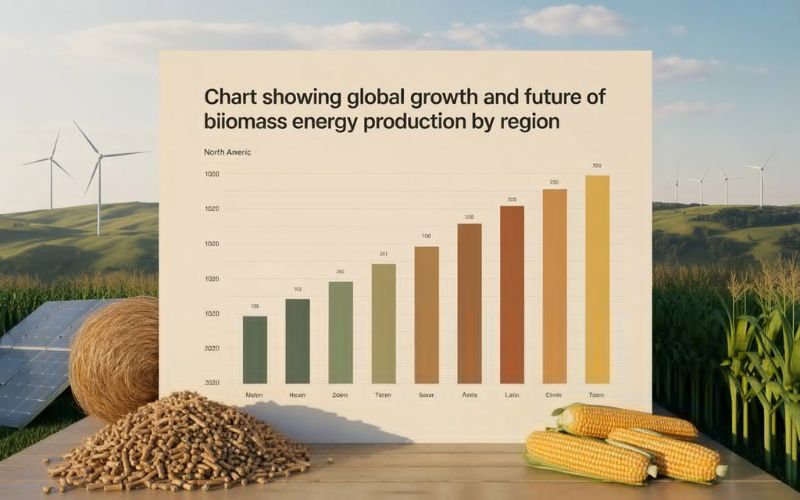
The future of biomass energy is bright thanks to innovation in feedstocks, process technologies, and integration with carbon capture. For instance, algae and energy crops are gaining attention for higher yields and less competition with food crops. (The Department of Energy’s Energy.gov)
Also, coupling biomass plants with carbon capture and storage (CCS) can potentially deliver carbon-negative power—absorbing more CO₂ than the system emits. These tools can make biomass a core player in the clean-energy transition. For another example of emerging renewable innovation, see geothermal energy in the United States.
Advanced Biofuels and Algae-Based Energy
Research on converting algae or dedicated energy crops into biofuels is advancing. These feedstocks offer promising yields and less land-use conflict.
Integration with Carbon Capture and Storage
When biomass systems are paired with CCS, the system may remove atmospheric CO₂, turning into a carbon sink rather than just a low-carbon system.
Hybrid Renewable Energy Systems
Combining biomass with solar, wind, or geothermal helps provide consistent power. Biomass can fill in when the sun or wind are low, making the overall energy system more reliable. You can learn more about geothermal’s renewable reliability here: Is geothermal energy renewable? facts & insights.
Biomass Energy Production in the Global Energy Transition
Globally, biomass energy production stands as a bridge technology—especially useful in sectors hard to electrify, like heavy industry or aviation. In the U.S., and across Europe and Asia, policy frameworks are increasingly including bioenergy. (IEA Bioenergy)
However, as the world shifts toward renewables, biomass must evolve to maintain credibility. It must complement, not compete with, solar and wind, and focus on sustainable sourcing and efficient conversion.
Biomass in the U.S. vs. Europe and Asia
In the U.S., biomass tends to focus on agricultural residues and combined heat & power systems; in Europe, wood-pellet imports and large power-plant conversions dominate.
Role in Decarbonizing Hard-to-Electrify Sectors
Biomass can deliver renewable heat and transport fuels where electricity alone can’t easily reach—such as industrial steam, shipping, or aviation.
Global Policy Outlook
Policies like the U.S. Renewable Fuel Standard (RFS) and EU wood-biomass sustainability standards guide which systems qualify, shaping future investment.
Case Studies and Real-World Examples
Examining real examples shows how biomass energy production works in practice. In Sweden, district heating systems rely heavily on forest-residue biomass, enabling wide penetration of renewable heat.
In the U.S., farms use anaerobic digesters to convert manure into biogas, powering local grids and reducing methane emissions. Each case shows how careful design and sourcing underpin success.
Sweden’s District Heating Success
Sweden uses wood-based biomass extensively for urban heat and power, demonstrating how local feedstocks and efficient systems scale.
U.S. Agricultural Biogas Projects
Typical projects in dairy or pig-farming states convert manure to energy; they deliver both renewable heat/power and reduced farm-waste burdens.
Lessons Learned from Global Implementation
Key takeaways: align feedstock availability with technology, maintain strong supply-chain logistics, ensure sustainability certification, and integrate with local energy systems.
What This Means for Pakistan and Developing Countries
While the focus so far has been on the U.S., the framework of biomass energy production offers lessons for Pakistan and other developing nations, too. Using agricultural residues and organic waste can power rural areas, reduce imports, and create jobs.
But infrastructure, investment, and policy support are often lacking. Localized biomass plants, small-scale digesters, and supportive regulation can enable developing regions to leapfrog toward modern renewable energy systems. Small communities can also benefit significantly from solar, as covered in Solar Power Your Home.
Localized Biomass Plants
Community-scale plants tailored to local feedstocks (for example, crop residues) are cost-effective and reduce transmission losses.
Infrastructure and Policy Needs
Critical enablers include feedstock collection systems, logistics, financing models, subsidies, and clear sustainability standards.
Rural Electrification and Job Creation
Biomass systems create new income streams for farmers and rural workers—and can supply off-grid or micro-grid power where the main grid is weak.
Takeaways & Action Points for Stakeholders
When looking at biomass energy production, several key actions emerge for different players. Governments must establish clear sustainability standards, incentives, and feed-in frameworks.
Industry leaders should invest in biomass conversion technologies, ensure robust feedstock supply chains, and integrate digital monitoring tools. Communities and investors can support local initiatives, push for transparent sourcing, and promote awareness. Researchers and innovators should focus on yield improvement, lifecycle analysis, and next-gen biofuels.
For Policymakers
Prioritize policies that reward genuine lifecycle GHG reduction, enforce sustainable sourcing, and allow biomass to plug into broader renewable-energy strategies.
For Industry Leaders
Adopt best-practice sourcing, invest in advanced conversion tech, and plan for integration with other renewables and CCS systems.
For Communities and Investors
Support local projects that return value to the community, verify impact claims, and help build the grassroots biomass supply chain.
For Researchers and Innovators
Focus on breakthroughs in feedstocks, further reducing costs, scaling up conversion efficiency, and plugging biomass into circular-economy systems.
Conclusion
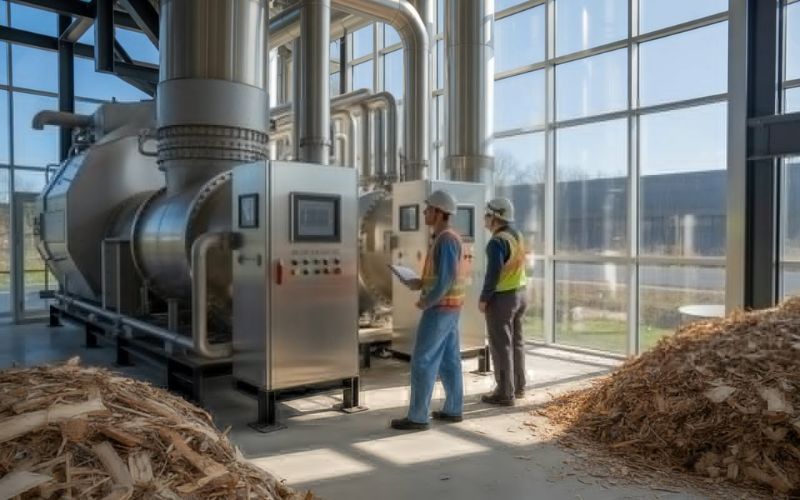
Biomass energy production holds immense promise for creating a more sustainable and resilient energy future. When managed diligently—through smart sourcing, advanced technologies, and clear policies—it can reduce waste, drive rural development, and help decarbonize sectors that are hard to electrify.
The path forward calls for collaboration among governments, industry, communities, and researchers to unlock the full potential of biomass renewable energy and turn the vision of a greener tomorrow into reality. To explore how other clean technologies are evolving alongside biomass, visit the top solar energy resources.
FAQs About Biomass Energy Production
Q1: What is biomass energy production?
A: Biomass energy production is the process of converting organic materials like plants, wood, and waste into renewable energy such as electricity, heat, or biofuels.
Q2: What are 5 examples of biomass energy?
A: Common examples include wood pellets, crop residues, animal manure, municipal solid waste, and algae-based biofuels.
Q3: What are 5 interesting facts about biomass?
1. Biomass is the oldest form of energy used by humans.
2. It can produce electricity, heat, and transportation fuels.
3. Biomass energy reduces landfill waste.
4. It’s considered carbon-neutral when managed sustainably.
5. The U.S. is one of the largest biomass producers globally.
Q4: Who produces the most biomass energy?
A: The United States leads in biomass energy production, followed by Brazil, China, and India.
Q5: What are the top 5 states that use biomass?
A: The top U.S. states using biomass energy are Georgia, Florida, California, Alabama, and Maine.
Q6: Where is 90% of the world’s biomass?
A: Around 90% of the world’s biomass is found in forests and tropical regions, mainly in South America, Africa, and Asia.

Welcome to Renewable Energy! I’m Adnan, Owner, Admin, and Author of this Website.