Quick Summary:
Biomass gasification is a rapidly advancing clean energy technology that converts agricultural residues, wood waste, and organic materials into syngas—a versatile fuel composed of hydrogen, carbon monoxide, and methane. In 2026, it is gaining global momentum as a key solution for producing low-carbon electricity, green hydrogen, and sustainable fuels.
Introduction
Biomass gasification is becoming a cornerstone of modern clean energy systems in 2026 and offering a powerful way to convert agricultural waste, forestry residues, and organic materials into a valuable fuel known as syngas. Through high-temperature conversion under limited-oxygen conditions. This process produces a gas mixture rich in hydrogen, carbon monoxide, and methane. This can be used for electricity generation, industrial heat, and even green hydrogen production.
As countries like the United States and regions across the European Union accelerate their transition toward net-zero emissions, biomass gasification is emerging as a scalable and flexible renewable energy solution.
Beyond energy production, this technology plays a vital role in reducing waste and supporting the global shift toward a circular bioeconomy. With a market value reaching approximately $125 billion in 2025 and projected to grow at a 7.5% CAGR through 2033, advancements in fluidized bed gasifiers, syngas cleaning systems, and carbon capture integration are improving efficiency and environmental performance. Here you can explore how biomass gasification works, its key benefits, latest technologies, market trends, and why it is increasingly seen as a critical pathway for achieving sustainable energy and climate goals worldwide.
What Is Gasification of Biomass? (Simple Explanation)
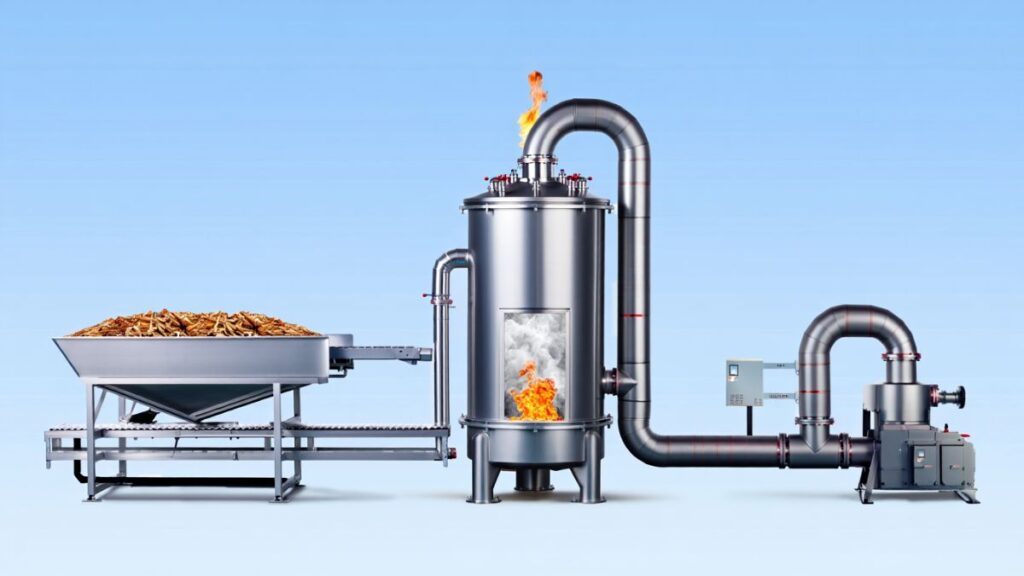
The gasification of biomass is a high-temperature process that converts solid biomass feedstock into a clean gas mixture called syngas. This gas mainly contains hydrogen, carbon monoxide, and methane. It can be used for turning biomass into energy, biofuels, bio-based chemicals, or biomass gasification for electricity in engines and turbines.
The process works at 600–850°C with controlled oxygen or steam. Research from the U.S. Department of Energy shows that higher temperatures increase hydrogen yield and improve biomass gasification efficiency. Moisture levels around 10–15% give the best performance, making pretreatment and drying very important.
Why Biomass Gasification Is Growing Fast in the USA
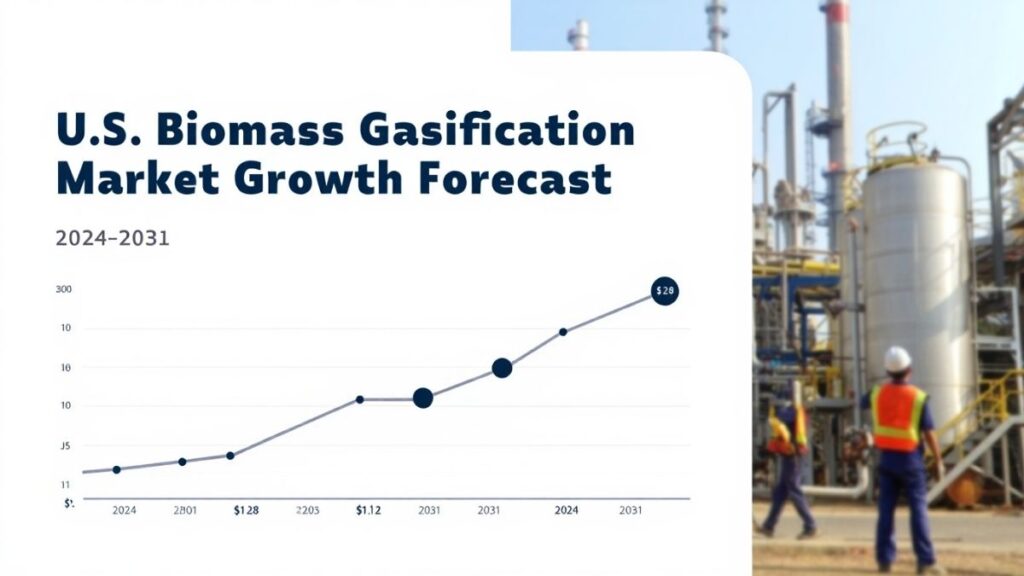
The U.S. is investing heavily in biomass gasification for clean power because it uses waste, reduces carbon emissions, and supports rural energy security. The market was worth $27.89 billion in 2024 and is projected to double to $56.1 billion by 2031, growing at a 10.5% CAGR
(Source: LinkedIn Market Report).
Modern gasification technologies reduce tar, create cleaner syngas, and require less expensive cleaning equipment. This makes gasification more cost-effective compared to older systems and improves uptime for gas engines.
How the Gasification of Biomass Works (Step-by-Step)
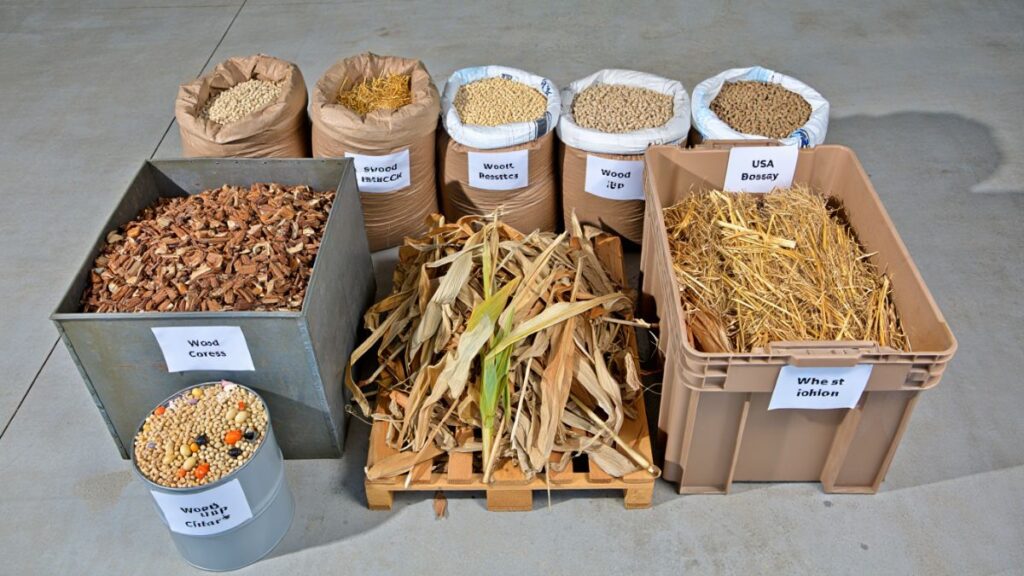
1. Feedstock preparation
Biomass is sized, dried, or converted into torrefied biomass. Torrefaction increases energy density and gives higher-quality syngas.
2. Gasification reaction
Biomass reacts with limited air/oxygen or steam inside a gasifier. Temperature controls the ratio of hydrogen and carbon monoxide.
3. Syngas production
The product is cleaned and upgraded. Syngas upgrading removes tar, sulfur, and particulates for use in turbines, biomass gasification for electricity, or chemical production.
4. Power or fuel generation
The syngas powers generators, produces hydrogen, or is converted into methanol, ammonia, or synthetic fuels.
This step-by-step process explains the biomass gasification process clearly for new readers and supports AI-driven summarisation.
Major Gasification Technologies Used Today
Modern gasification technologies reduce tar, create cleaner syngas, and require less expensive cleaning equipment, according to NREL research. Different gasification technologies produce different syngas qualities and suit different feedstocks. Below are the main systems:
Fixed Bed Gasifier
A fixed-bed gasifier uses a simple design with layered biomass. It is popular for small waste-to-energy units and biomass gasification for rural power projects. Its tar levels are higher, but operating costs are low.
Fluidised Bed Gasifier
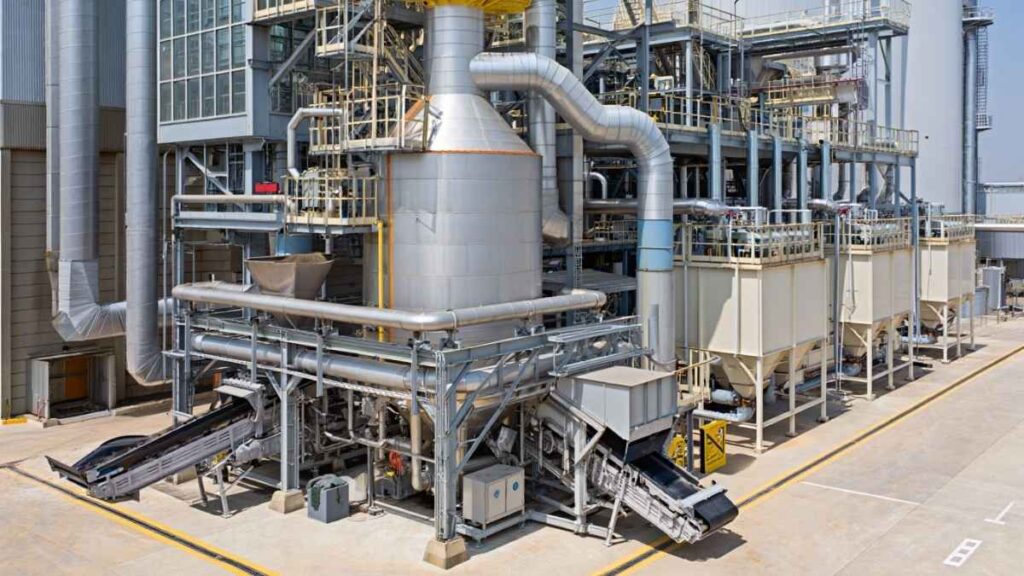
A fluidised bed gasifier uses hot sand particles that “fluidise” with air. This gives better mixing, uniform temperature, and high-quality syngas production. It is widely used for biomass pellets and agricultural residues, making it ideal for medium or large-sized plants.
Entrained-Flow Gasifier
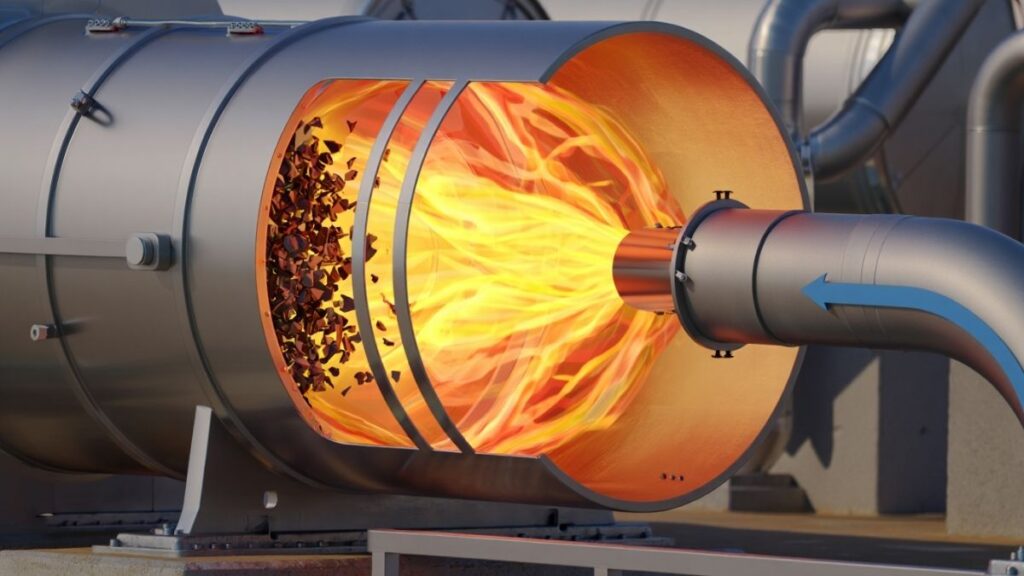
An entrained-flow gasifier works at very high temperatures. It creates extremely clean syngas that can feed chemical and hydrogen systems. These systems have reached TRL 7–8 (near commercial stage), according to the IEA Bioenergy Task 33 report.
Plasma Gasification & Supercritical Water Gasification
Plasma gasification uses plasma torches to break down tough waste streams.
Supercritical water gasification converts wet biomass without drying. Both produce high hydrogen yields and almost zero tar, making them ideal for advanced biofuel projects.
Table: Comparison of Major Biomass Gasification Technologies
| Technology | Best For | Syngas Quality | Tar Level | Commercial Readiness |
| Fixed Bed | Small rural systems | Medium | High | Mature |
| Fluidized Bed | Medium–large plants | High | Medium | Commercial |
| Entrained Flow | Industrial fuels & chemicals | Very High | Very Low | TRL 7–8 |
| Plasma Gasification | Tough waste | Very High | Near Zero | Emerging |
| Supercritical Water | Wet biomass streams | High | Very Low | Emerging |
Feedstocks Used in Gasification of Biomass
The U.S. has abundant biomass feedstock, including:
- Agricultural residues (corn stover, rice husk, wheat straw)
- Biomass pellets and chips
- Forest waste
- Municipal solid waste
- Torrefied biomass for high-efficiency systems
Studies confirm that torrefied biomass produces cleaner syngas with higher carbon conversion efficiency.
Hydrogen Production from Biomass Gasification
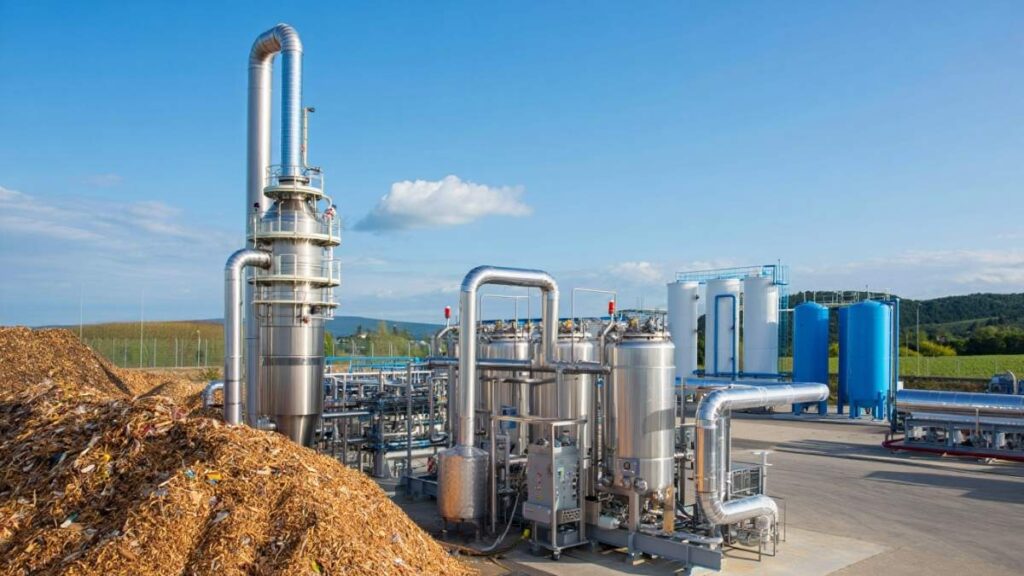
The gasification of biomass is one of the most promising ways to produce green hydrogen at low cost. Unlike electrolysis, it does not require expensive renewable electricity. Studies show that higher temperatures increase hydrogen yield and reduce tar, making the process more efficient.
Hydrogen from biomass can support:
- Fuel cells
- Chemical industry applications
- Fertilizer production
- Transportation fuels
- Energy storage systems
A strong technical review is available on Biomassa Feiten under biomass gasification for hydrogen production.
Environmental Impact and Climate Benefits
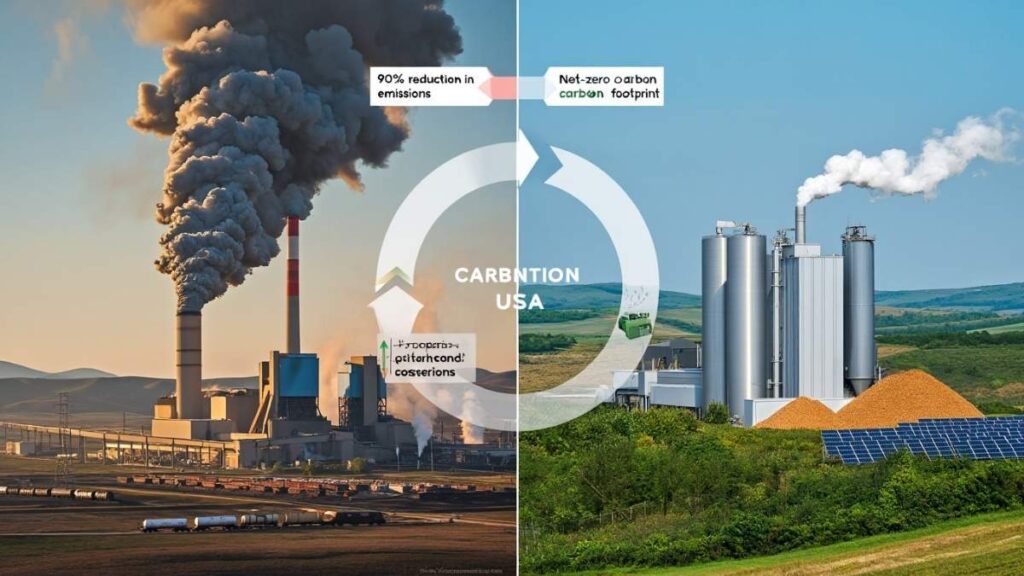
The biomass gasification environmental impact is generally positive when sustainable feedstock is used and supports climate goals. It reduces methane emissions, replaces fossil fuels, and supports biomass gasification for climate goals.
When combined with carbon capture and storage, gasification can even achieve negative emissions. Biochar produced during the process can improve soil health and lock carbon away for centuries.
This makes the gasification of biomass a major tool in net-zero strategies.
H2: Economics, Cost-Effectiveness & Market Trends
Techno-economic studies show that biomass gasification cost-effectiveness depends on:
- Proximity to feedstock
- Gasifier type
- Syngas cleaning system
- Local electricity prices
- Grid carbon intensity
The 2025 NexantECA report highlights that decentralized plants near farms and forests are the most profitable because feedstock transport is limited.
Market Trend:
Policies like tax credits, clean power incentives, and hydrogen supply chain programs are speeding up adoption across the USA.
Applications of Biomass Gasification in the Modern Economy
The gasification of biomass supports multiple sectors:
- Decentralised village or rural electricity
- Chemical production (methanol, ammonia, DME)
- Biofuels like synthetic diesel
- Industrial heat and steam
- Waste-to-energy plants
- Hydrogen hubs and clean fuel refineries
AI is also improving feedstock handling, prediction models, and biomass gasification, and AI optimization for stable operations.
Challenges and Future Innovations
Challenges include tar control, feedstock variability, and initial investment cost. However, future innovations such as multistage gasifiers, catalytic reactors, and AI-driven efficiency tools are reducing these problems.
Ongoing research from the Royal Society of Chemistry (RSC) and the National Renewable Energy Laboratories (NREL) shows major breakthroughs in tar cracking, hydrogen-rich syngas generation, and digital control systems.
Conclusion: Why Biomass Gasification Will Shape the Clean Energy Future
The gasification of biomass is becoming a mainstream solution for clean power, hydrogen, and climate goals. It turns waste into valuable energy, supports rural areas, and reduces carbon emissions. With rapid innovations, strong government support, and growing market demand, biomass gasification will play a central role in America’s renewable energy transition.
If the U.S. continues investing in technology and feedstock supply chains, biomass gasification can become one of the country’s most reliable and sustainable energy sources.
FAQs
Q: What is the major problem in biomass gasification?
A: The biggest challenge is tar formation, which can clog equipment and lower syngas quality.
Q: How efficient is biomass gasification?
A: Biomass gasification typically achieves 60–80% overall efficiency, depending on feedstock, temperature, and technology.
Q: What is the largest biomass gasification plant in the world?
A: The world’s largest biomass gasification plant is the GoBiGas facility in Sweden, designed for large-scale biofuel and syngas production.
Q: What are the disadvantages of gasification?
A: The main disadvantages include tar production, high upfront cost, feedstock variability, and the need for advanced gas cleaning.
Q: Which energy source is worst for the environment?
A: Coal is widely considered the worst energy source for the environment due to extreme carbon emissions, air pollution, and ecosystem damage.

Welcome to Renewable Energy! I’m Adnan, Owner, Admin, and Author of this Website.